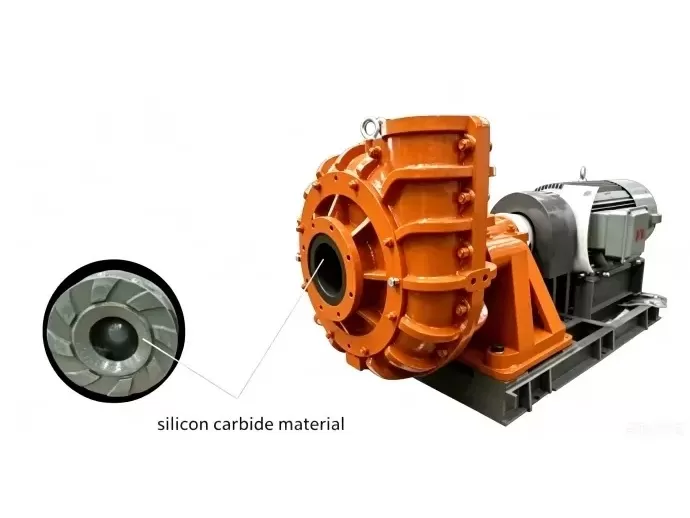
Why Traditional AH Slurry Pumps Are Gradually Replaced by SiC Ceramic Pumps
The AH series heavy‑duty slurry pump with high‑chrome alloy wet‑end parts has long‑served mineral processing, tailings transportation and coal‑washing projects worldwide. Nevertheless, in working conditions with fine sharp abrasive particles and corrosive slurry, traditional AH slurry pump suffers fast erosion, frequent spare‑part replacement and efficiency decay. As mining operators pursue lower total‑cost‑of‑ownership and longer uptime, SiC ceramic pump is gradually becoming a preferred upgrade solution for many concentrator sites. As a professional slurry pump manufacturer, XO Slurry Pump (www.xoslurrypump.com) supplies both AH series complete pumps and interchangeable SiC ceramic wet‑end components for global mining customers.Traditional high‑chrome AH pumps deliver reliable performance for coarse‑particle heavy‑slurry duties. However, when handling quartz‑rich fine abrasive slurry or acidic‑alkaline leaching slurry, high‑chrome alloy wet‑ends wear rapidly. Frequent shutdown for liner and impeller replacement brings production loss and high maintenance labor cost. Silicon carbide ceramic reaches Mohs 9.2 hardness, providing superior abrasion and chemical corrosion resistance compared with conventional high‑chrome alloy materials. Many mines adopt SiC ceramic wet‑ends to retrofit existing AH pump housings without modifying original foundation and piping layout.
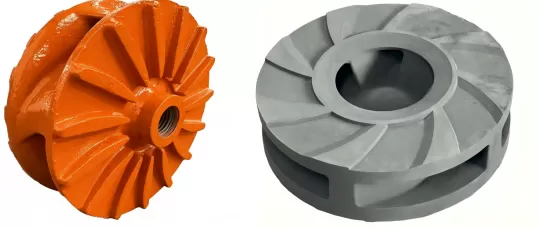
Alt text:SiC ceramic wet‑end components and traditional high‑chrome alloy parts for AH slurry pump side‑by‑side comparison
Core Performance Comparison: Traditional AH Pump VS SiC Ceramic Pump
The gap is reflected in wear resistance, corrosion tolerance, efficiency retention and overall site maintenance workload.
Table 1 — Performance comparison: Traditional AH high‑chrome pump vs SiC ceramic slurry pump
| Evaluation Item | Traditional AH High‑Chrome Alloy Slurry Pump | SiC Ceramic Slurry Pump |
|---|---|---|
| Main wet‑end material | High‑chromium white iron | Reaction‑sintered silicon carbide |
| Mohs hardness | 5.5‑6.0 | 9.2 |
| Typical service life (fine abrasive slurry) | 1‑3 months | 8‑18 months |
| Corrosion resistance | Limited under acid‑alkali slurry | Excellent for most pH‑range mineral slurry |
| Hydraulic efficiency retention | Drops obviously as components wear | Maintains high efficiency for long operating hours |
| Main applicable scenarios | Coarse‑particle heavy slurry | Fine sharp abrasive & corrosive mining slurry |
| Retrofit feasibility | Original standard unit | Directly retrofit for existing AH pump housing |
1. Superior Wear‑Resistance for Fine Abrasive Slurry
For mineral processing sites transporting fine sharp‑edged ore particles, the wear rate of high‑chrome AH wet‑ends accelerates sharply. As the core advantage of silicon carbide slurry pump, Mohs 9.2 hardness resists cutting erosion from quartz and silicate particles. Service life of ceramic wet‑ends can reach 3‑6 times longer than traditional high‑chrome alloy counterparts under similar fine‑particle working conditions. Less frequent component replacement greatly cuts unplanned downtime risk.
2. Chemical Inertness for Corrosive Mining Slurry
Traditional high‑chrome AH pump will generate electrochemical erosion when exposed to acidic leaching slurry or chloride‑containing tailings. Silicon carbide ceramic material is chemically inert, stable under most acid‑alkali mineral medium, avoiding synergistic erosion‑corrosion failure which commonly occurs on metal wet‑ends. This feature is valuable for hydrometallurgy and tailings pond projects.
3. Stable Hydraulic Efficiency & Energy Saving
Metal wet‑ends gradually form erosion pits and irregular flow‑passage surfaces after long‑time operation. Pump efficiency keeps declining and power consumption rises. SiC ceramic maintains smooth inner surface even after long‑term running. The pump stays within high‑efficiency working zone for much longer periods, bringing continuous energy‑saving benefit for mining plants.
4. Retrofit Compatibility Reduces Upgrade Investment
Most ceramic slurry pump mining solutions support direct retrofit for existing AH pump equipment. Operators only replace wet‑end components instead of modifying pump base, pipelines and motor assembly. It avoids large‑scale reconstruction investment, lowering the threshold for equipment upgrade.
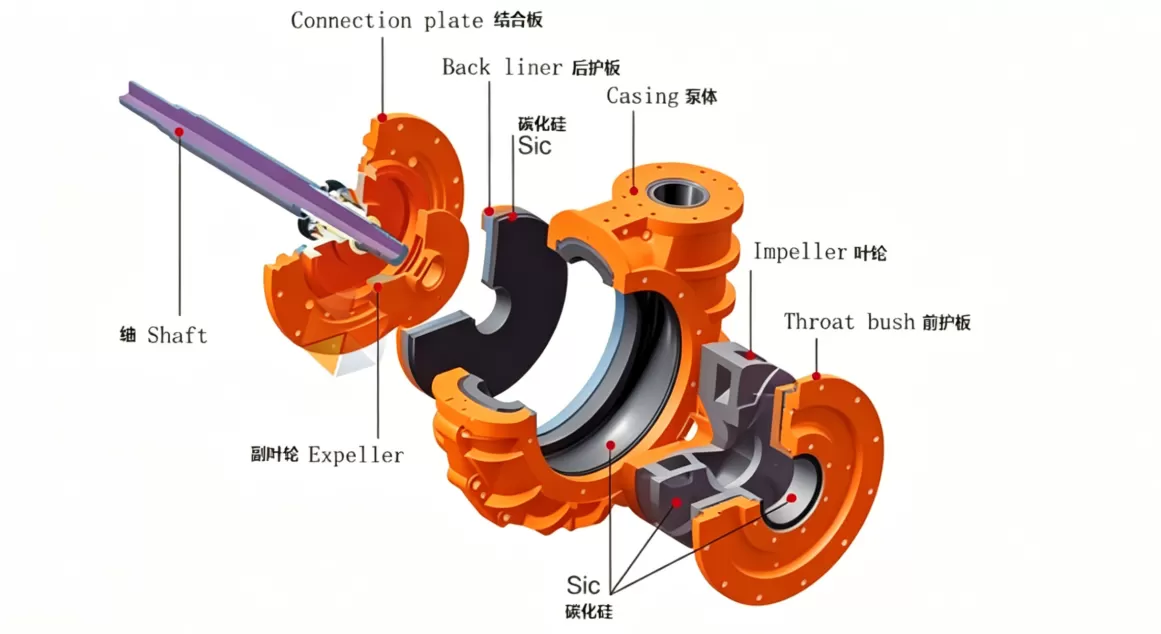
Alt text:Cut‑away view of AH slurry pump showing replaceable SiC ceramic wet‑end components inside pump housing
Practical Application Boundary
SiC ceramic pump is not universal for all mining conditions. It is not recommended for scenarios with large tramp metal and huge coarse‑particle impact load. In such cases, traditional high‑chrome AH pump still keeps its advantages. Site engineers should evaluate particle size, abrasiveness, corrosivity and tramp‑material risk before selecting material solutions.
Common Mine‑Site Upgrade Mistakes
Blindly apply SiC ceramic components for heavy large‑particle impact working conditions, ignoring ceramic brittleness limitation.
Expect zero‑maintenance after ceramic retrofit; regular inspection on assembly and sealing system is still required.
Neglect slurry screening, allowing tramp metal entering pump cavity and causing ceramic component cracking.
Conclusion
Traditional AH slurry pump remains a proven solution for coarse‑particle heavy‑slurry transportation. Nevertheless, for fine‑sharp‑abrasive and corrosive mineral slurry, SiC ceramic wet‑ends deliver prominent advantages in service life, corrosion‑resistance and efficiency stability, and can be retrofitted on existing AH pump housings. More and more mines choose SiC ceramic pump to cut spare‑parts cost and reduce unplanned downtime, which explains why it is gradually replacing traditional AH pumps in many critical concentrator positions.XO Slurry Pump provides AH series pumps and interchangeable SiC ceramic wet‑end spare‑parts. Visit www.xoslurrypump.com for professional working‑condition evaluation and material‑selection consultation for your mining project.