
Ceramic Pump vs Rubber Liner Pump: Which Is Better for Fine & Abrasive Slurry?
Fine abrasive slurry such as flotation tailings, filter press feed and fine concentrate is one of the most common and tricky duties inside concentrator plants. Many operators debate ceramic slurry pump vs rubber liner slurry pump when facing fast wear on fine sharp particles. Neither material wins universally for all fine abrasive slurry; the correct choice depends on particle shape, impact level, chemical environment and operating tip speed. As a professional mineral processing pump manufacturer, XO Pump supplies both SiC ceramic wet parts and full rubber liner pump options, you can review our material upgrade solutions at https://www.xoslurrypump.com. This article breaks down wear physics, application boundaries and site selection practice.
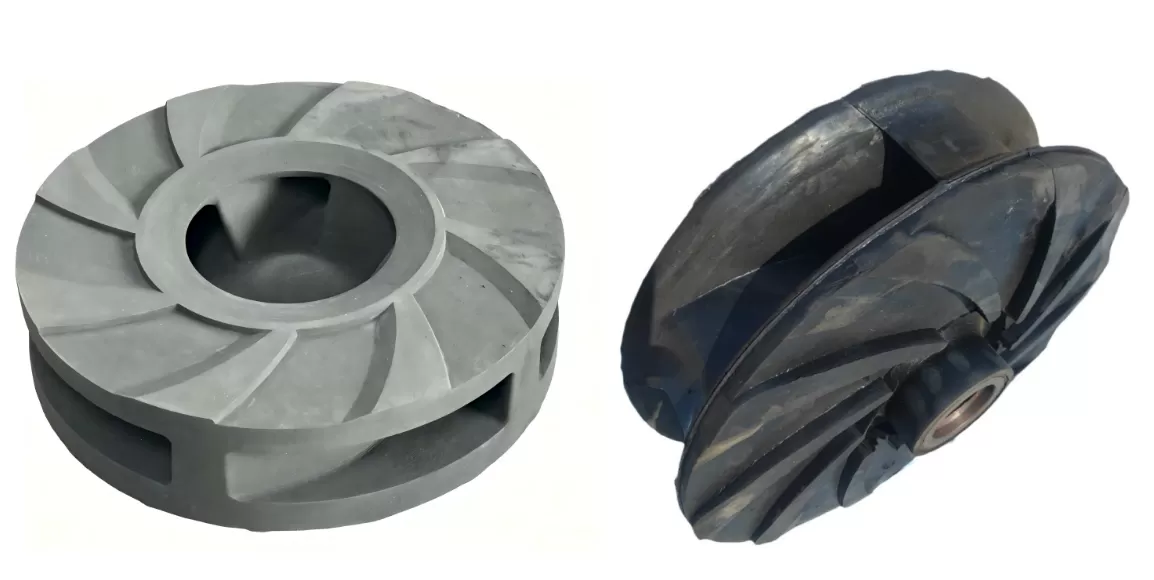
Two different wet‑end material routes for pumping fine abrasive slurry in mineral processing
Rubber liner pumps rely on elastic resilience. When fine rounded particles hit the liner surface, rubber deforms and absorbs impact energy without cutting material away. This mechanism works reliably for rounded fine tailings at moderate tip speed. However for sharp angular hard fines such as quartz, iron ore or silica, particle edges slice and gouge rubber surface, accelerating liner failure. Rubber also has clear limits on temperature, strong solvents and high head pressure.
By contrast, ceramic slurry pump (mostly SiC silicon carbide) works by ultra‑high hardness. It resists sliding / cutting wear extremely well for fine sharp abrasive particles, and delivers excellent acid corrosion resistance. For low‑impact steady flow fine slurry, SiC wet parts can reach multiple times longer life than rubber liner. Its main weakness is material brittleness: any oversized tramp rock, sudden impact or severe vortex air entrainment risks chipping or cracking ceramic components.
Table 1: Application comparison: ceramic pump vs rubber liner pump on fine abrasive slurry duty
| Evaluation Item | Rubber Liner Slurry Pump | Ceramic (SiC) Slurry Pump |
|---|---|---|
| Dominant wear mode | Cut by sharp angular fines | Brittle fracture from impact / oversize particle |
| Best particle profile | Fine, rounded, low impact | Fine, sharp, abrasive, no tramp oversize |
| Abrasion on sharp fine slurry | Poor, fast gouging wear | Excellent, greatly extended service life |
| Impact tolerance | Good, absorbs particle shock | Low, vulnerable to rock impact |
| Chemical & acid resistance | Mild acid / alkaline only | Excellent for acidic fine slurry |
| Max recommended tip speed | Lower speed < 27 m/s | Can run higher velocity fine slurry |
| Typical limitation | Sharp particles, high temp, hydrocarbon media | Oversize rock, impact load, higher upfront cost |
| Best‑fit scenario | Rounded fine tailings, moderate corrosion | Sharp fine abrasive slurry, acidic circuit, filter press feed |
For pure fine abrasive slurry with sharp hard particles and minimal oversize, ceramic slurry pump is usually the better performer. It is especially suitable for flotation concentrate, leach circuit slurry, filter press feeding and fine tailings with acidic pH, where rubber liner wears rapidly.
Rubber liner slurry pump remains the better choice when: particles are rounded; occasional small oversize cannot be fully excluded; slurry carries strong impact risk; or you prioritize impact tolerance and lower initial part cost. Many concentrators also run hybrid setups: rubber for rounded tailings circuit, SiC ceramic wet‑end upgrade for sharp fine abrasive stream on the same pump base.
Two practical selection tips. First, screen out +1~2 mm tramp material before feeding into ceramic pump circuit. Second, do not generalize "fine slurry" — always separate rounded fine vs sharp abrasive fine, this single distinction decides which material delivers lower total cost of ownership.
There is no absolute winner between ceramic slurry pump and rubber liner slurry pump for fine abrasive slurry. Rubber excels at rounded fine particles with impact tolerance; ceramic dominates sharp fine cutting‑wear and acidic low‑impact conditions. Correct slurry pump material selection starts from particle shape, not only nominal particle size. Matching wet‑end material to actual slurry characteristic brings maximum uptime for mineral processing circuits.
Contact our engineering team if you need assessment whether rubber liner or SiC ceramic wet parts fit your existing fine slurry pumping circuit.