
IIoT Smart SiC Ceramic Pump: Predictive Wear Monitoring System
SiC ceramic slurry pumps deliver exceptional abrasion resistance for harsh mineral processing, but plant operators still face challenges: it is impossible to visually inspect internal wet-end wear during continuous operation. Operators used to rely on periodic shutdown inspection or runtime-based spare part replacement, which either causes unnecessary downtime or risks sudden pump failure. The IIoT smart SiC ceramic pump equipped with predictive wear monitoring system solves this problem, continuously tracking wet-end component degradation and forecasting remaining service life for SiC impellers, liners and shaft sleeves. XOSLurryPump integrates this IIoT monitoring system into our SiC ceramic slurry pump packages for mining and tailings applications.
Traditional Pain Points of SiC Ceramic Slurry Pump Operation
SiC ceramic wet ends extend service life greatly when pumping abrasive slurry, yet ceramic components have unique failure modes such as gradual material erosion and hidden microcracks. Operators cannot judge wear status through external observation. Time-based maintenance often replaces still-usable SiC parts, raising operating costs. If wear is underestimated, degraded wet ends will reduce pump efficiency, trigger vibration spikes and even lead to unexpected shutdowns. For 24/7 mineral processing circuits, unplanned pump outage creates heavy production losses.
How the IIoT Predictive Wear Monitoring System Works
The IIoT smart SiC ceramic pump installs multiple sensors on pump wet end, bearing assembly and pipeline. Sensors continuously collect vibration, acoustic emission, pressure, temperature and power consumption data. Edge gateway transfers data to the cloud dashboard. Machine learning algorithms analyze data trends to calculate the wear rate of SiC ceramic components and estimate remaining useful life. When wear approaches the preset warning threshold, the system automatically sends alerts to maintenance teams. Operators can arrange replacement during planned shutdown windows instead of reacting to sudden breakdowns.
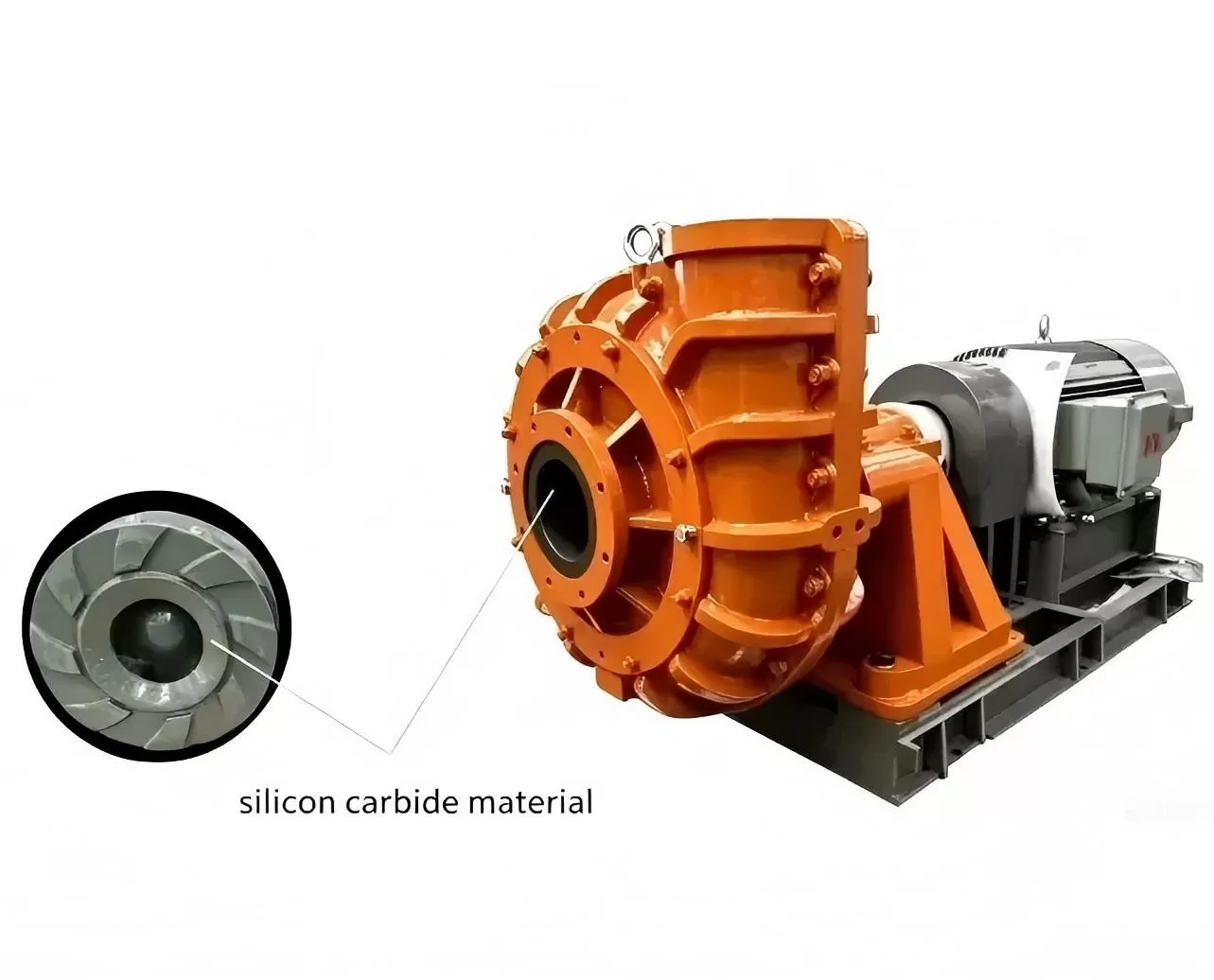
Key Sensors & Data Metrics for Wet-End Wear Tracking
Different sensors capture indicators reflecting SiC wet-end degradation. Acoustic emission sensors detect particle impact signals and tiny ceramic microcracks. Vibration sensors monitor vibration spectrum changes caused by impeller wear and clearance shift. Pressure and flow sensors track hydraulic efficiency drop as liner wears. Motor current sensors capture power fluctuations from increasing internal recirculation. The platform combines all these metrics to build a comprehensive wear profile, far more reliable than single-point manual inspection.
System Comparison: Manual Inspection vs IIoT Predictive Wear Monitoring
| Item | Manual Periodic Inspection | IIoT Predictive Wear Monitoring on SiC Ceramic Pump |
|---|---|---|
| Wear data collection | Intermittent, only during shutdown | Real-time 24/7 continuous tracking |
| Wet-end condition judgement | Visual check, subjective estimation | Algorithm-based wear rate and remaining life prediction |
| Maintenance trigger | Fixed schedule | Condition-based, wear threshold alert |
| Unplanned downtime risk | Medium to high | Greatly reduced |
| Labour requirement | High, needs pump disassembly | Low, remote dashboard monitoring |
Field Operation Benefits for Mineral Processing Plants
The predictive wear monitoring system maximizes the return on investment of SiC ceramic slurry pump. It makes full use of every SiC wear part’s service life and eliminates premature replacement. Early warning of microcracks prevents catastrophic ceramic component fracture. Operators can optimize operating parameters like slurry concentration and pump speed to slow down wear. Historical wear data also helps plant engineers refine circuit design and pump selection for future expansion projects.
Real Mining Application Case
A lithium concentrator in Australia deployed 3 sets of our IIoT smart SiC ceramic pumps with predictive wear monitoring for hard ore slurry transportation. Over 14 months of continuous operation, the monitoring system accurately predicted 4 instances of liner wear and sent advance alerts. The plant eliminated unplanned shutdowns caused by wet-end failure. Spare parts cost dropped by 31% because SiC components were replaced only when reaching the wear limit. The total cost of ownership of the pumping system was significantly reduced.
Conclusion: Intelligent Wear Monitoring Maximizes SiC Pump Value
SiC ceramic material alone is not enough to achieve optimal long-term pump performance. Paired with the IIoT smart SiC ceramic pump predictive wear monitoring system, mining plants can shift from scheduled maintenance to condition-based predictive maintenance. This integrated solution combines ultra-high wear resistance of SiC ceramics with digital monitoring technology to stabilize production and lower total operating cost. XOSLurryPump supplies complete smart SiC ceramic slurry pump packages. Visit https://www.xoslurrypump.com to learn more about our intelligent pumping solutions.