
SiC Ceramic Slurry Pump for Lithium Spodumene & Brine Mining
Global lithium production expands rapidly from hard‑rock spodumene ore and salt‑lake brine resources. Lithium processing creates highly demanding working media: spodumene tailings contain hard sharp silicate particles, while brine slurry carries acid‑alkaline corrosive components. Conventional high‑chrome alloy and rubber liner pumps often suffer rapid erosion‑corrosion failure. The SiC ceramic slurry pump has become a practical upgrade option for many lithium projects to extend service life of wet‑end components.Lithium spodumene processing generates fine‑to‑medium sharp silicate particles after crushing and roasting. Together with acidic leaching agents, the slurry brings combined abrasion and corrosion damage. For lithium brine mining, saturated salt slurry contains chloride ions, which accelerate metal pitting corrosion. Ordinary pumps face frequent liner and impeller damage, triggering unplanned shutdown and high spare‑parts consumption. Selecting a proper lithium spodumene slurry pump directly influences plant operating cost and production stability.
| Wet‑end Material | Spodumene abrasive‑slurry | Brine corrosive‑slurry | Main Limitation |
|---|---|---|---|
| High‑chrome alloy | Medium service life | Poor, chloride corrosion | Susceptible to chemical pitting |
| Natural rubber liner | Poor against sharp particles | Good for neutral brine | Easily cut by spodumene sharp grains |
| SiC ceramic | Excellent anti‑abrasion | Good anti‑corrosion | Avoid heavy large‑particle impact |
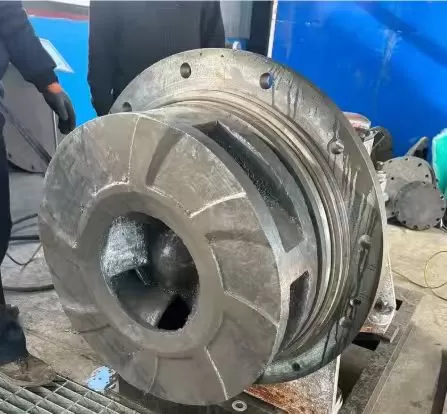
SiC ceramic material features high hardness and outstanding chemical inertness, which makes the ceramic wet end pump resist both particle scouring and salt‑ion corrosion. In spodumene circuits with fine‑medium particle size, SiC ceramic impeller and liner can achieve 2‑4 times longer runtime compared with high‑chrome alloy. For lithium brine transfer, it avoids metal corrosion failure caused by chloride brine, greatly lowering spare‑part changing frequency.Even so, SiC ceramic is not universal for all lithium working conditions. Site engineers must evaluate particle impact intensity. When large lump spodumene particles frequently enter pump cavity, heavy impact may cause ceramic chipping. Under this circumstance, hybrid configuration is recommended: ceramic wet‑ends for fine‑particle leaching and tailings pipeline transfer, high‑chrome alloy for coarse crushing discharge.When specifying a lithium brine mining pump, besides wet‑end material, users also need to check shaft seal forms, anti‑corrosion fasteners and reasonable operating speed. Lower operating velocity further protects ceramic components and maximizes service cycle. Many lithium plants make the mistake of only focusing on flow and head while ignoring medium corrosivity, leading to short pump service life.
Key selection checklist for lithium mining slurry pumps
Confirm particle size distribution: avoid severe heavy impact on ceramic wet‑ends
Test slurry PH value and chloride ion concentration
Control pump rotating speed to reduce surface scouring velocity
Match shaft seal type for brine or acidic leaching slurry
Set proper particle removal protection to block oversized lumps
Conclusion
Both spodumene hard‑rock and salt‑lake brine lithium projects face combined abrasion and corrosion challenges. The SiC ceramic slurry pump delivers obvious advantages for fine‑medium particle corrosive‑abrasive slurry. Reasonable material matching and operating parameter setting will help lithium processing plants cut maintenance expense and improve continuous operation rate.If you are sourcing reliable pumping solutions for lithium processing projects, please visit www.xoslurrypump.com for technical consultation and customized configuration.